This is the homepage of Ricky's website that is in development.
Discover the why behind the world around you. Our lessons make complex ideas simple, from the tiniest atoms to the vastness of the cosmos. Whether you’re a curious beginner or a budding scientist, we bring experiments, real-world examples, and interactive learning to help you think like a scientist — and have fun while doing it.

Science
Science is a systematic process of exploring the natural world through observation, experimentation, and evidence-based reasoning. It spans disciplines like physics, chemistry, biology, and astronomy, aiming to understand how the universe and its components function."The good thing about science is that it's true whether or not you believe in it."
-Neil deGrasse Tyson
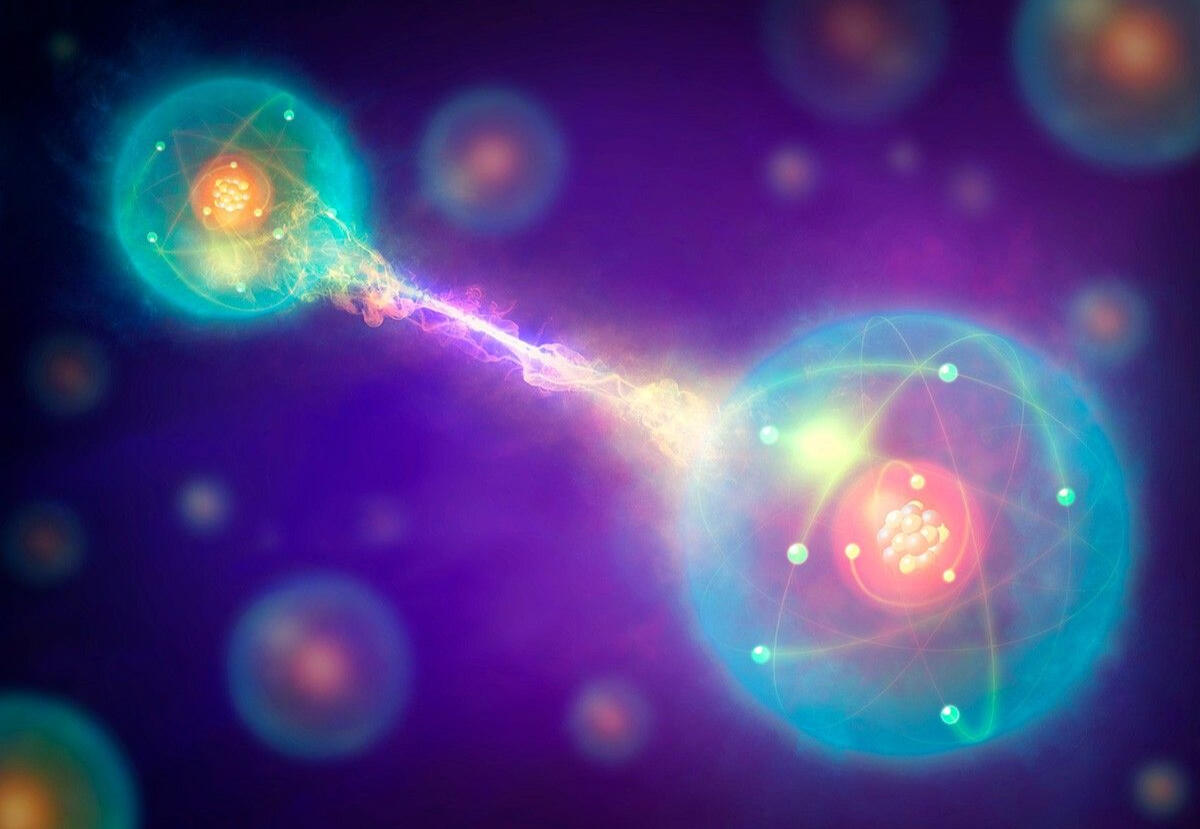
Chemistry is the branch of science that studies matter — its composition, structure, properties, and the changes it undergoes. It explores how atoms and molecules interact, form bonds, and transform through chemical reactions. These principles explain everything from the oxygen we breathe to the materials in our phones.

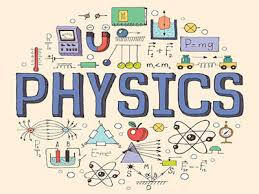
Physics is the branch of science that studies matter, energy, and the fundamental forces of nature. It examines how the universe behaves — from the motion of planets to the behaviour of subatomic particles — using laws and mathematical models to explain and predict phenomena.
Biology is the scientific study of life and living organisms — including their structure, function, growth, origin, evolution, and distribution. It covers everything from microscopic cells and bacteria to plants, animals, and ecosystems. Biology’s key branches include microbiology, genetics, anatomy, biochemistry, molecular biology, biotechnology, evolutionary biology, immunology, etc..

"For students, amateurs, researchers, and everyone in between, science fun facts are little sparks of knowledge that ignite curiosity, turn everyday observations into moments of wonder, and connect the dots between what we see, what we question, and what we discover. They make learning enjoyable, inspire deeper exploration, and remind us that even the smallest detail in nature or technology can reveal an amazing story about our universe."

Chess
Chess is a two-player strategic board game played on an 8×8 grid of alternating light and dark squares (64 squares total). Each player controls 16 pieces — one set is light (White), the other dark (Black). The goal is to checkmate the opponent’s king — putting it in a position where it is under attack (check) and cannot escape capture on the next move.
Opennings
Openings are crucial playing chess because they determine how the game will go. Choosing the right opening for you can be extremely beneficial
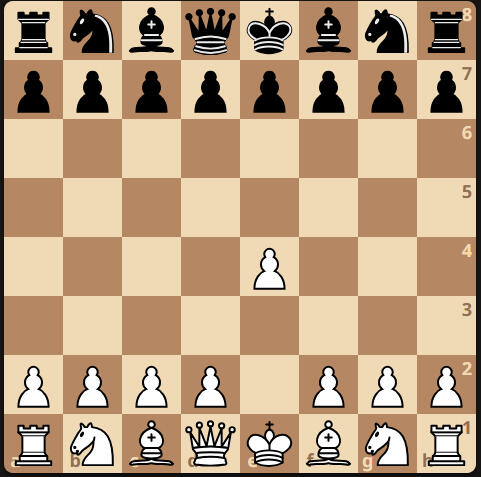
This the most common opening in chess for white. It begins with e4and leads to a variety of interesting positions and plays. Think: how should black respond to this?
Thank you for your support by buying our products
We appreciate your support
If you would like to have something reviewed, please fill out the form
Today I will be reviewing RickyNova.com and rate it a 5/5 stars
If you would like to suggest an improvement, just fill out this form or use the email shown above. : )
Ricky’s Space & Chess Robot Adventure — A 10-page custom story about curiosity, kind self-talk,
and small fixes leading to big wins. Written and laid out by Ricky, age 12, in Victoria. This sample
shows how a child’s name, interests, and values can become a gentle, playful story—delivered as a
printable PDF within 48 hours. Sample a storybook from RickyNova.com
------------------------------------------------------------------------------Disclaimer: Partly made with the use of artificial intelligence.
Why light is data in Astronomy?
How do astronomers collect information about light? After all, scientist can't just take stars into laboratories and study them. The answer: light. Through detecting light, astronomers can find information about the star by studying how the light reflects, the spetrum and where it came from.
Light is import to astronomy as it carries a plethora of information. For example, by detection the spectrum of light, astronomers can determine what composition a star is by observing spectral lines. Each element has its own unique spectral lines. Different wavelengths of light tell us different information. Colours of visible light may reflect temperature : red is cooler, blue is hotter. Infrared is utilized to detect objects behind dust; ultraviolet can show extremely hot gas and young stars; x -rays reveal energetic objects such as black holes and neutron stars.
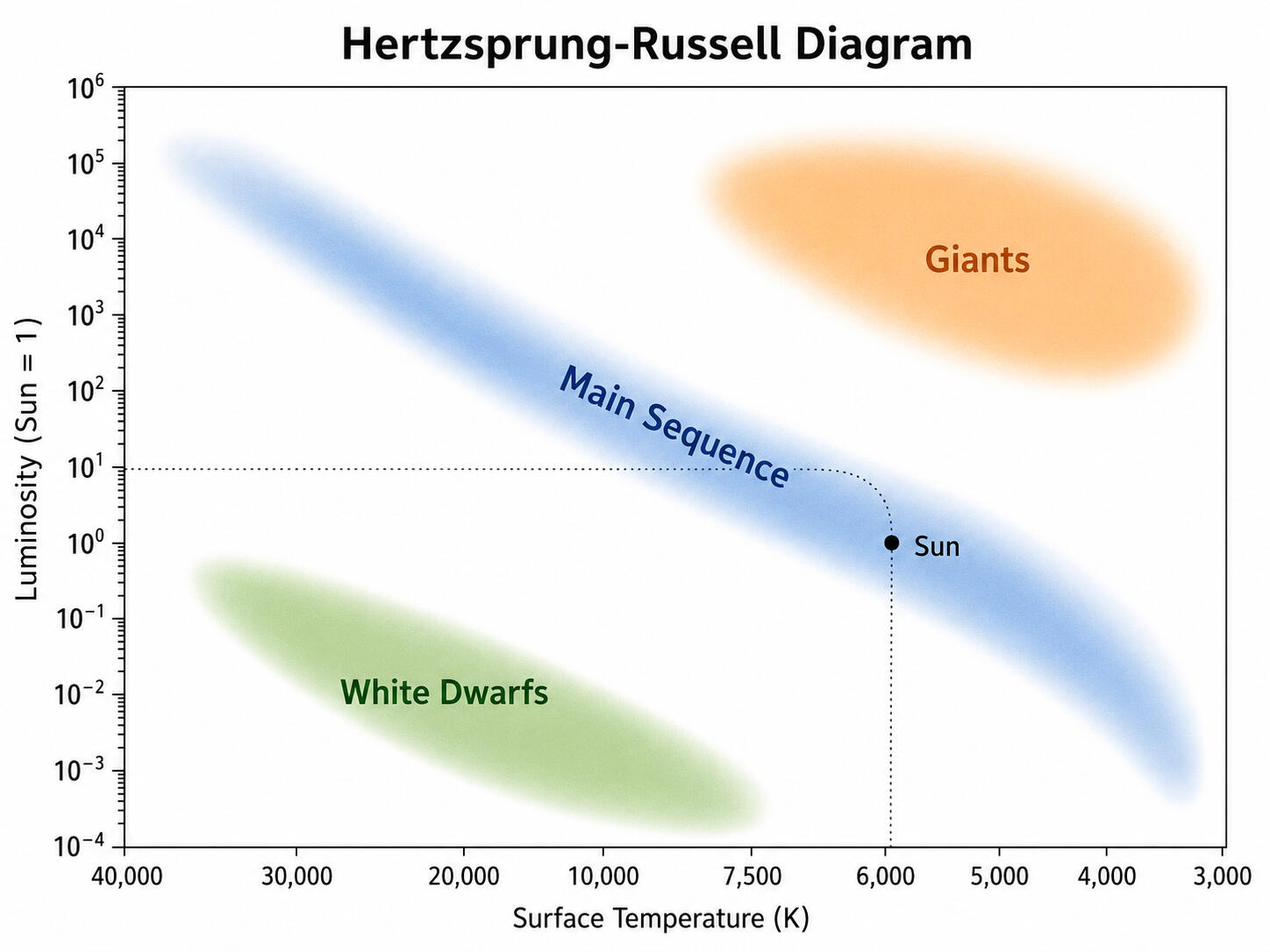
Why bright things may not be hot?
From one Square to a Circular System
The loop makes the grid rotate 12 times and the squares are equally spaced out. The angle step is 360 / 12 because to make each square evenly spaced, it has to be. The push matrix saves the position and the pop matrix restores the saved position. This prevents the square from appearing randomly. Rectmode center changes the rotation to be around the center.

ProjectLab Week 1
Function Machines in Math and Code
This week, I built my first small Python project called Function Machine Visualiser. The project
shows how a function takes an input, follows a rule, and produces an output. I tested functions such
as f(x) = 2x + 3, g(x) = x2 − 4, and h(x) = 3x − 1.The most important idea was function composition. For example, g(f(x)) means the input goes
through f first, and then the result goes through g. I learned that order matters because g(f(x))
and f(g(x)) can produce different answers.
This connects to my long-term interests in AI, robotics, mathematics, astronomy, and coding because
many real systems turn inputs into outputs.
ProjectLab Week 2
How Long Would Interstellar Travel Take?
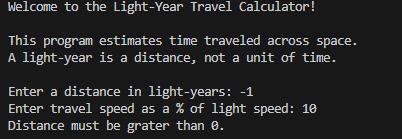
To answer this question we can use a calculator. The Light Year Travel Calculator. It works by taking the distance and approximating a percentage of the speed of light and dividing them. It also has limits. Distance cannot be below 0 speed cannot be less than 0 and although it speed is faster than the speed of light it is calculated, in regular circumstances it will not happen. Below are some examples of inputs and outputs of the calculator.
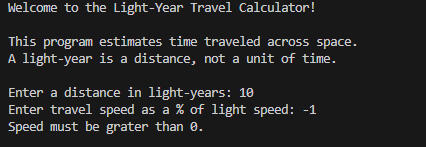
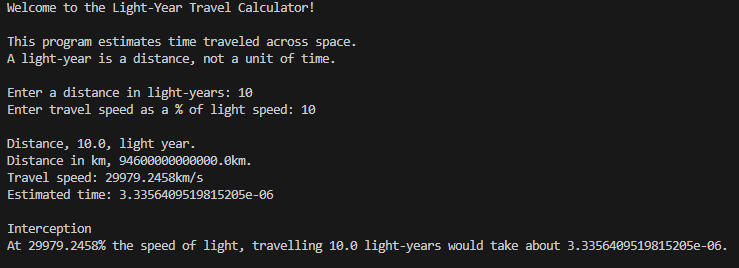
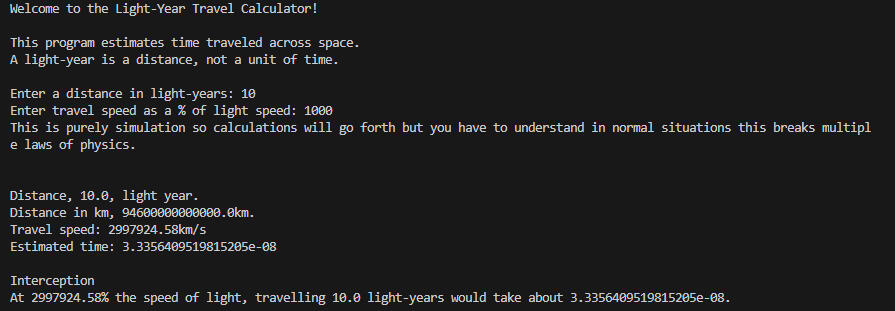
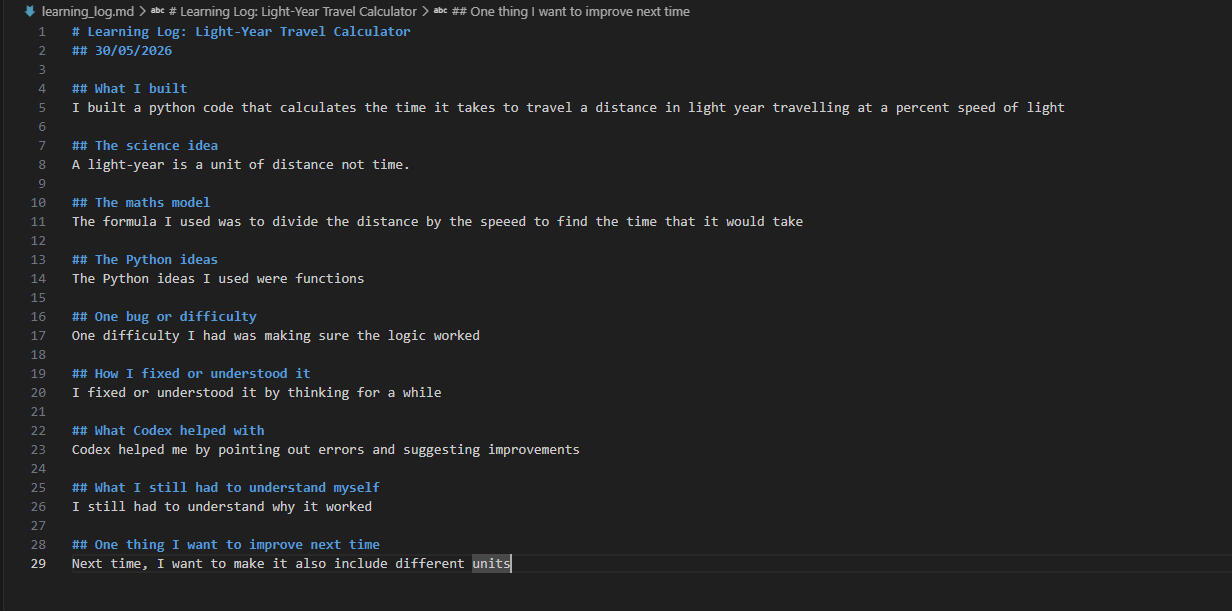
This is the README it is used to tell reader what a piece of code will do. In this example, the README tells you that the Light Year Function machine will:The user enters:
- distance in light-years
- speed as a percentage of light speedThe program calculates:
- distance in kilometres
- speed in kilometres per second
- travel time in years
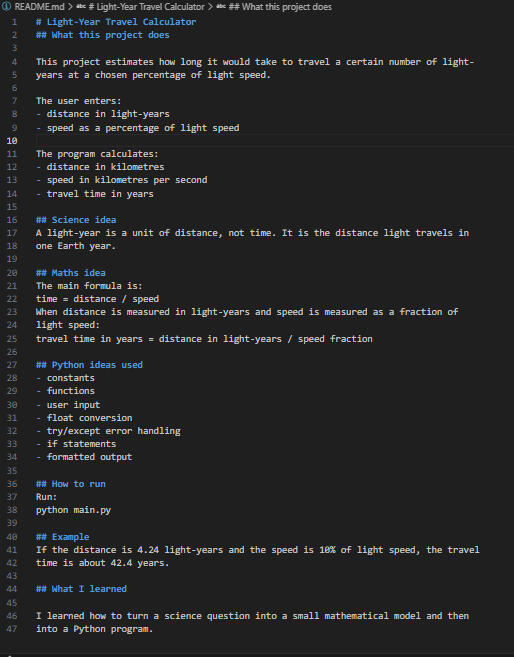
Light is used in astronomy because it is one of the fastest and most detectable forms of information in the universe. In empty space, light travels at about 300,000 kilometres per second, so one light-year is about 9,460,000,000,000 kilometres. Even at an extremely fast speed of 1,000 kilometres per second, it would still take almost 300 years to travel just one light-year. This matters because many stars, nebulae, and galaxies are not just a few kilometres away; they may be hundreds, thousands, or even millions of light-years from Earth. Since astronomers cannot usually visit these objects directly or collect samples from them, they must study the light that reaches us. Light becomes the evidence that allows scientists to investigate distant objects in space.
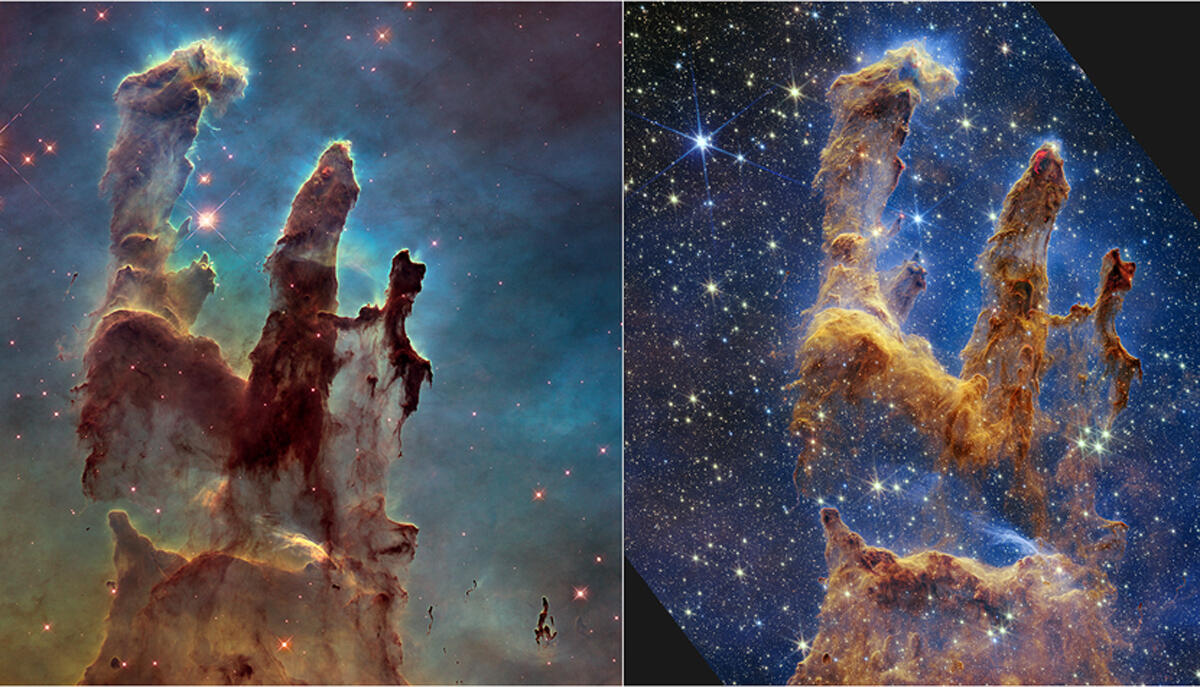
Left : Hubble-style visible-light image. Dust clouds, gas pillars, dramatic shadowy shapesRight : James Webb-style infrared image. Many more stars, hidden structures, light passing through dust.
Light is a form of energy that travels as electromagnetic radiation. It moves extremely fast — about 300,000 kilometres per second in empty space.Light can behave like both a wave and a particle. As a wave, it has different wavelengths. These wavelengths decide what kind of light it is. The light humans can see is called visible light, but there are many other types of light, including radio waves, infrared, ultraviolet, X-rays, and gamma rays.Light is important because it carries information. In astronomy, scientists study light from stars, planets, and galaxies to learn what they are made of, how hot they are, how far away they are, and whether they are moving. This means light is not just something we see — it is also data.A simple way to think about it:Light is energy that travels through space and carries information about the objects that produced or reflected it.
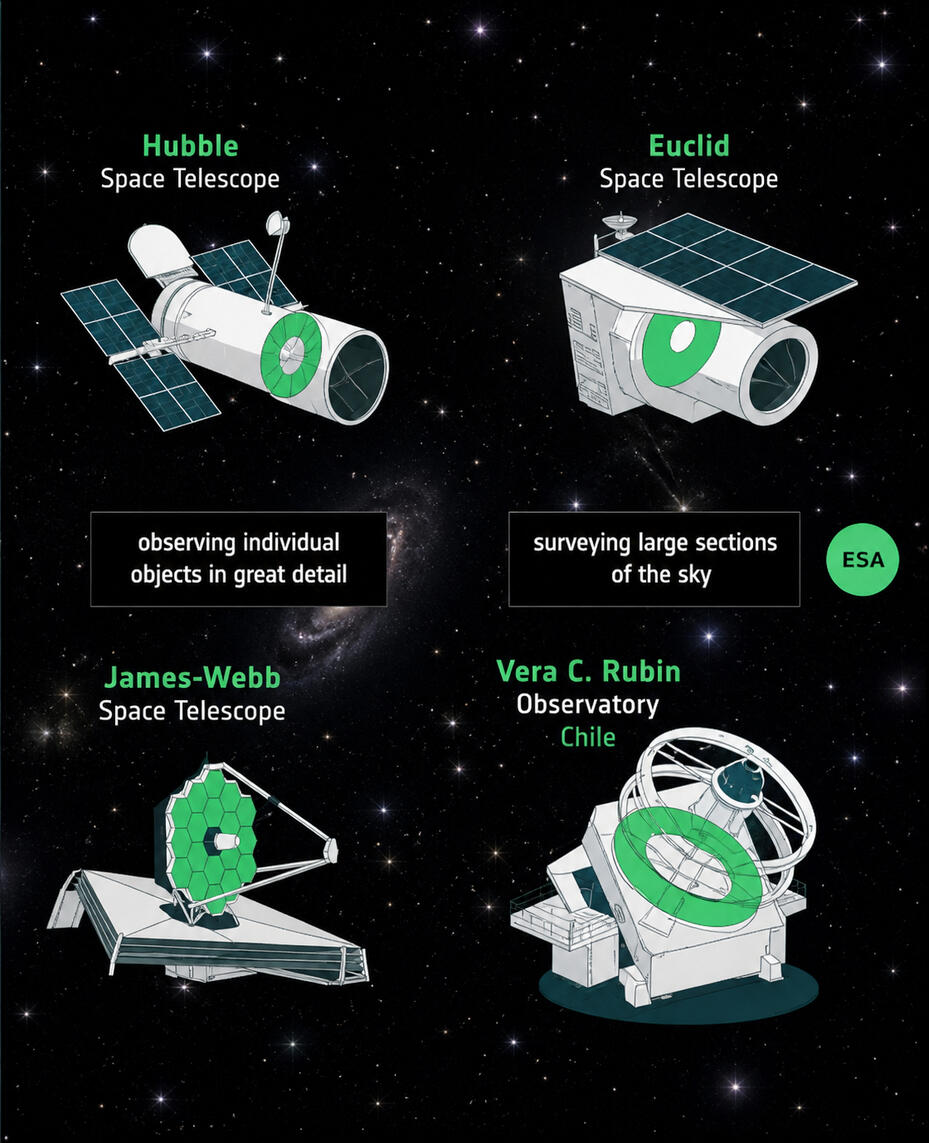
This image compares several major telescopes, including Hubble, Euclid, James Webb, and Vera C. Rubin Observatory. Each one is designed to collect light in a different way. Hubble observes individual objects in great detail, while Euclid and Rubin survey large areas of the sky. James Webb detects infrared light, which helps scientists see through dust and study very distant objects. Together, these telescopes show that astronomy is not just about looking at space; it is about collecting light as data.
Mass determines Density in Stars
Stars do not all live for the same amount of time. Their lifespan depends mainly on their mass. Low-mass stars burn their nuclear fuel slowly, so they can survive for billions or even trillions of years. High-mass stars, however, burn their fuel much faster because their cores are hotter and under greater pressure. As a result, they shine more brightly but live much shorter lives, often lasting only millions of years.Mass also determines the path a star follows after it runs out of fuel. A low-mass star, such as the Sun, expands into a red giant, sheds its outer layers to form a planetary nebula, and leaves behind a white dwarf. A high-mass star becomes a red supergiant and may explode in a supernova, leaving behind either a neutron star or a black hole. Therefore, mass is one of the most important factors in deciding how bright a star becomes, how long it lives, and what it becomes after deat
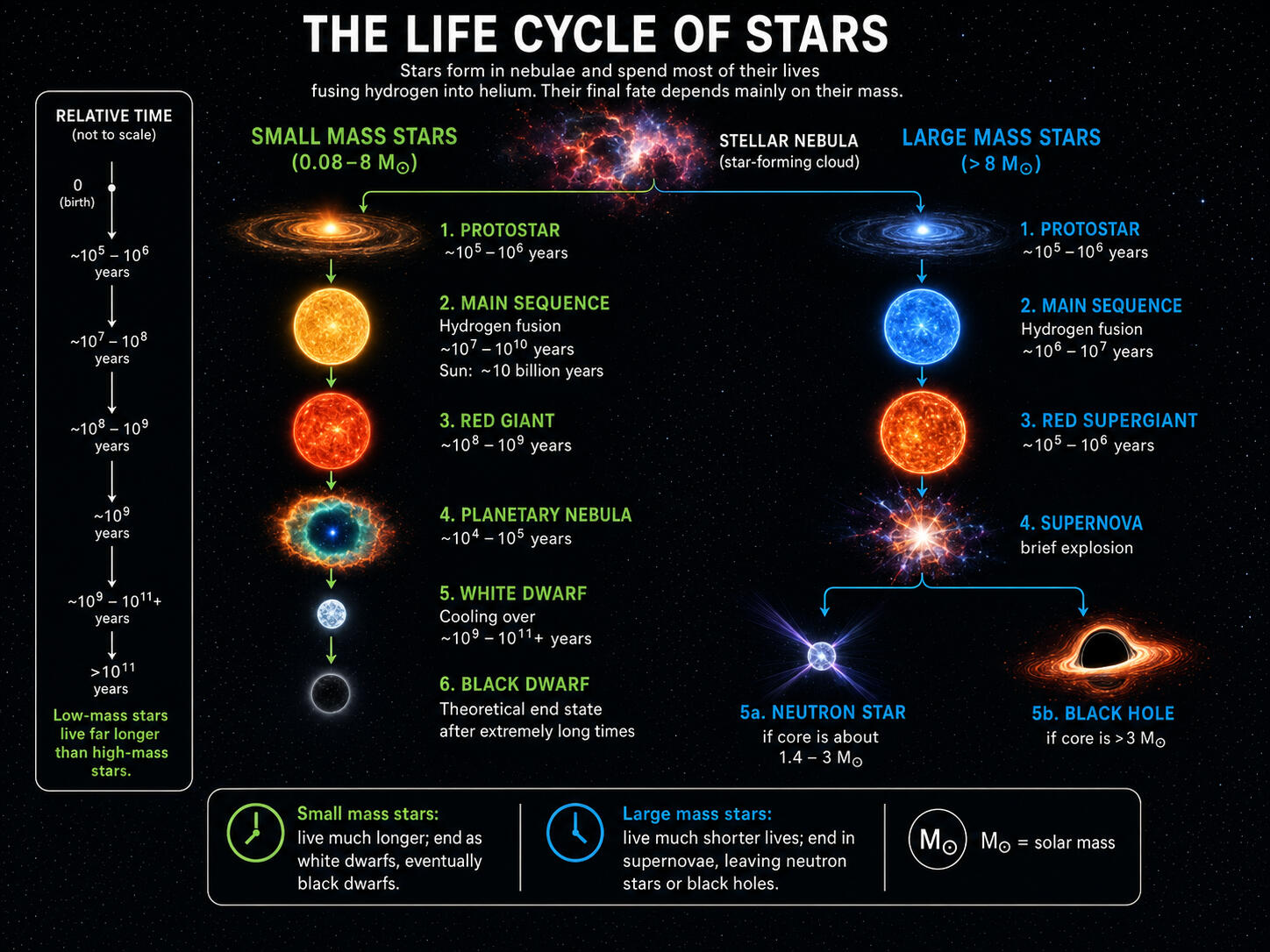
This diagram compares the life cycles and approximate lifespans of low-mass and high-mass stars, showing how mass affects a star's evolution and final fate.
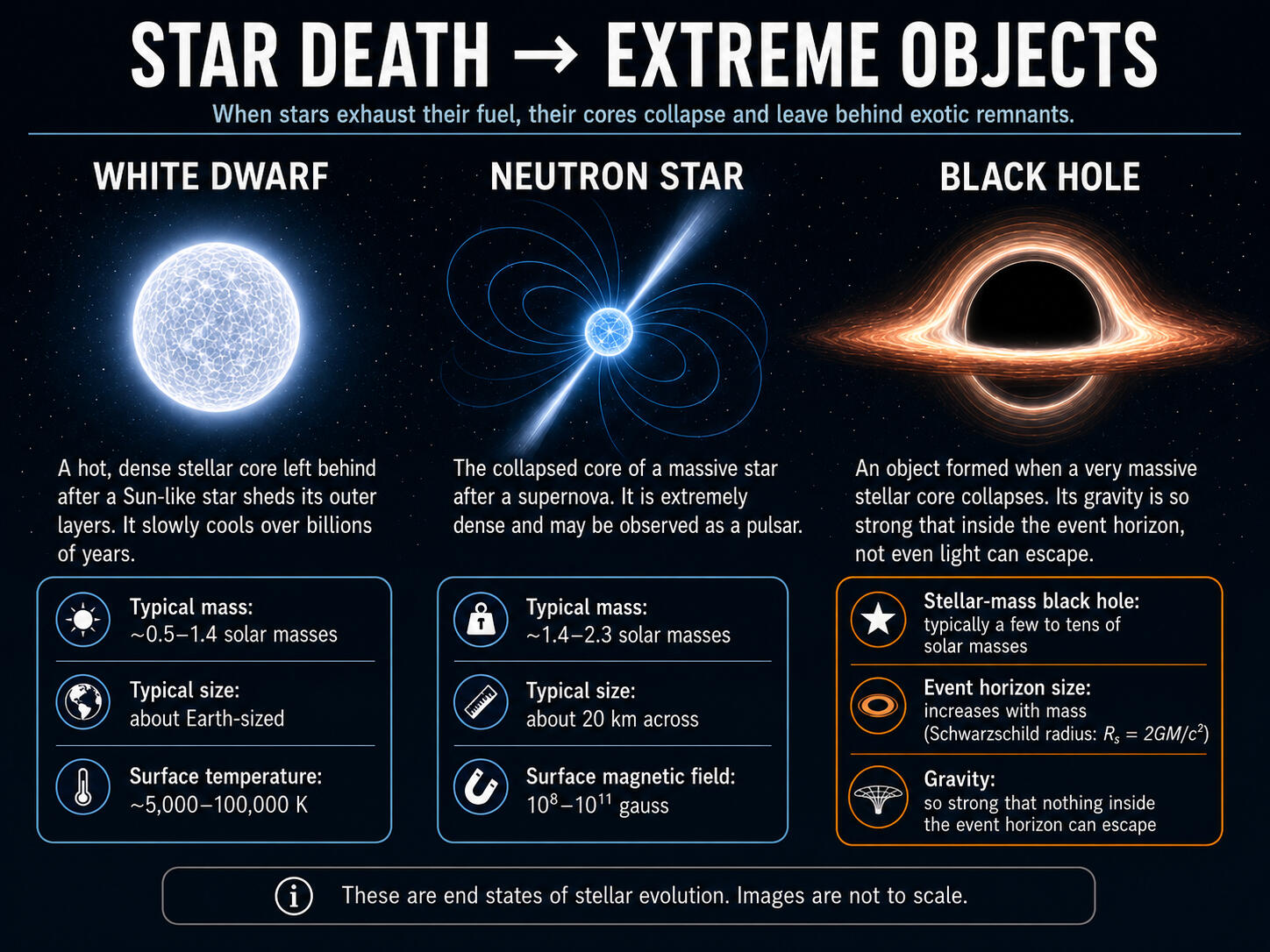
When a star dies, it may leave behind one of three extreme cosmic objects: a white dwarf, a neutron star, or a black hole. Which object forms depends mainly on the mass of the original star and the mass of the core left behind after the star runs out of nuclear fuel.The simplest of these objects is a white dwarf. A white dwarf is the leftover core of a small- or medium-mass star, such as the Sun, after the star expands into a red giant and sheds its outer layers to form a planetary nebula. White dwarfs are extremely dense, but they are usually only about the size of Earth. Their surface temperatures can range from about 5,000°C to 100,000°C, although they slowly cool over billions of years because they no longer produce energy through nuclear fusion.A neutron star forms when a more massive star explodes in a supernova and its core collapses under gravity. The collapse is so intense that protons and electrons are forced together to form neutrons. Neutron stars are incredibly dense: a star with more mass than the Sun can be squeezed into a sphere only about 20 kilometres wide. Some neutron stars spin rapidly and release beams of radiation; when these beams point toward Earth, we observe them as pulsars.A black hole forms when the core of a very massive star collapses even further. Its gravity becomes so strong that within a boundary called the event horizon, not even light can escape. Black holes cannot be seen directly, but scientists can detect them by observing how they affect nearby stars, gas, and light. Some black holes are formed from dying massive stars, while much larger supermassive black holes exist at the centres of many galaxies.Overall, smaller stars usually end as white dwarfs, while larger stars may end as neutron stars or black holes. These objects show how gravity, mass, and stellar evolution determine the final fate of a star.
Maths project
How Counting Problems Are Like Search Algorithms
Counting problems must define the final object. For example, if you were told to pick 4 out of 10 students the final object would be the four students in this. There are two main ways of counting objects that have more conditions: Case split counting and complement counting which both involve much less operations.
Case split counting
1. How It Works
If you have a set of items, S, and you divide it into n distinct, smaller categories (cases) (C1, C2, ... C_n) that do not overlap, the total ## Casework: The Addition Principle1. How It WorksIf you have a set of items, S, and you divide it into n distinct smaller categories, or cases, C1, C2, ..., Cn, where the cases do not overlap, then the total number of items is the sum of the number of items in each case:|S| = |C1| + |C2| + ... + |Cn|This is called the Addition Principle.---2. When to Use ItUse casework when a problem cannot be solved cleanly with one simple formula.Casework is especially useful for:Complex conditions:
When certain combinations break the rules, making it difficult to use permutations or combinations directly.Overlapping-looking situations:
When items can be grouped logically by a specific trait, such as the first digit, last digit, colour, size, or position.Edge cases:
When special scenarios, such as zero, exact limits, repeated restrictions, or physical constraints, need to be handled separately.---3. Step-by-Step ExampleSuppose we want to find the number of 3-digit numbers greater than 500 that can be formed using the digits:3, 4, 5, 6, 7Digits cannot be repeated.Because the restriction "greater than 500" depends only on the hundreds digit, we split the problem into cases based on the first digit.---Case 1: The first digit is 5Hundreds place: 1 choice
Tens place: 4 choices left
Ones place: 3 choices left1 × 4 × 3 = 12So there are 12 numbers in this case.---Case 2: The first digit is 6Hundreds place: 1 choice
Tens place: 4 choices left
Ones place: 3 choices left1 × 4 × 3 = 12So there are 12 numbers in this case.---Case 3: The first digit is 7Hundreds place: 1 choice
Tens place: 4 choices left
Ones place: 3 choices left1 × 4 × 3 = 12So there are 12 numbers in this case.---Final CalculationAdd the results from all the cases:12 + 12 + 12 = 36Therefore, there are:36possible 3-digit numbers greater than 500.
Complement counting
1. The Core FormulaComplement counting is based on the idea that sometimes it is easier to count what you do not want, then subtract it from the total.Formula:|A| = |U| - |Aᶜ|Where:A = the set of outcomes you want to count
U = the universal set of all possible outcomes
Aᶜ = the complement set, meaning the outcomes you do not want---2. When to Use ItUse complement counting when direct counting would be too difficult or too long.It is especially useful when the problem includes phrases such as:At least one
Example: at least one heads, at least one defective itemAt most
Example: at most two students absentNot or No
Example: no two people sitting next to each other---3. Step-by-Step ExampleProblem:If you flip a fair coin 5 times, how many ways can you get at least one heads?---Step 1: Count the Total OutcomesEach coin flip has 2 possible outcomes: heads or tails.Since the coin is flipped 5 times:2⁵ = 32So there are 32 total outcomes.---Step 2: Count the Unwanted OutcomesThe opposite of getting at least one heads is getting zero heads.That means every flip must be tails:TTTTTThere is only 1 unwanted outcome.---Step 3: SubtractUse the complement formula:|A| = |U| - |Aᶜ||A| = 32 - 1|A| = 31Therefore, there are 31 ways to get at least one heads.
The questions in AMC maths are designed to test much more than simple calculation, because they often require students to think carefully, recognise hidden patterns, and choose efficient strategies rather than just apply memorised formulas. At the beginning, the questions usually appear quite accessible, with straightforward arithmetic, basic geometry, simple algebra, number patterns, and logical reasoning problems that help students build confidence. However, as the paper progresses, the difficulty increases steadily, and the later questions often become much more challenging, requiring deeper problem-solving skills, creative thinking, and the ability to connect different areas of mathematics. Many AMC questions are written in a way that looks simple at first, but they contain small traps, unusual conditions, or clever shortcuts that separate strong problem solvers from students who only use routine methods. Some questions involve counting arrangements, finding probabilities, analysing shapes, working with ratios, exploring divisibility, or identifying relationships between numbers, while others require students to draw diagrams, test cases, or work backwards from the answer choices. A key feature of AMC maths is that the questions reward clear reasoning and mathematical insight, so students need to slow down, read each question carefully, and avoid rushing into calculations before understanding what the problem is really asking. Overall, AMC maths questions are interesting, varied, and intellectually demanding because they challenge students to use logic, flexibility, and creativity to solve problems in ways that go beyond normal classroom exercises.
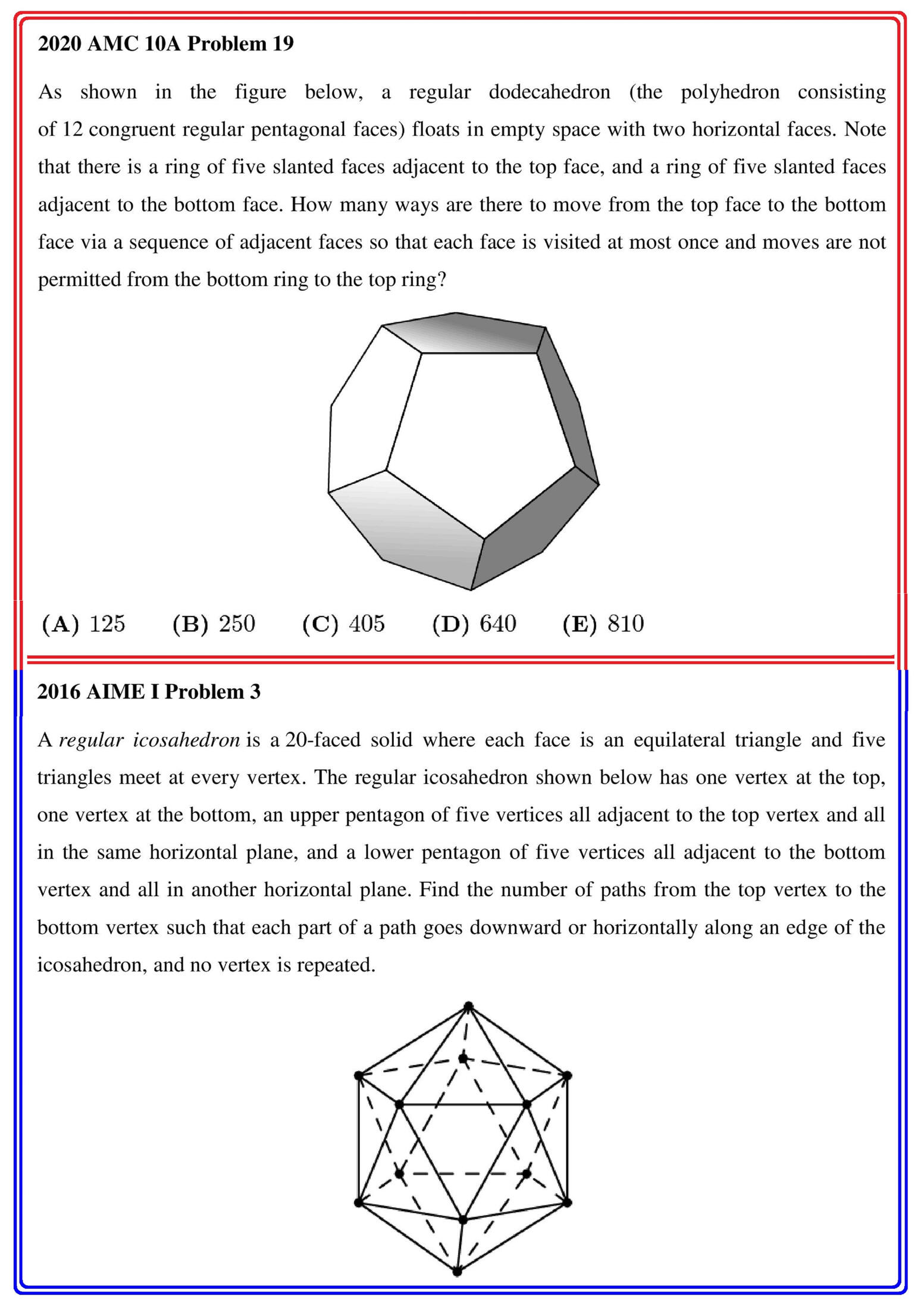
Image above shows an example of an amc question type